Agent Bricks on Databricks: Full Breakdown, Comparison, and What to Evaluate Before You Build
Agent Bricks is not one product with one release date. Here is the component-by-component GA status, the real cost drivers, and how it compares to Genie and Mosaic AI.
It's Monday morning. A VP of Sales needs to know which accounts churned in Q2 by region, and your analyst queue already has 40 tickets. The answer is sitting in your warehouse. The problem is that extracting it requires SQL that nobody outside the data team knows how to write — so the question waits, and the data team becomes the bottleneck again.
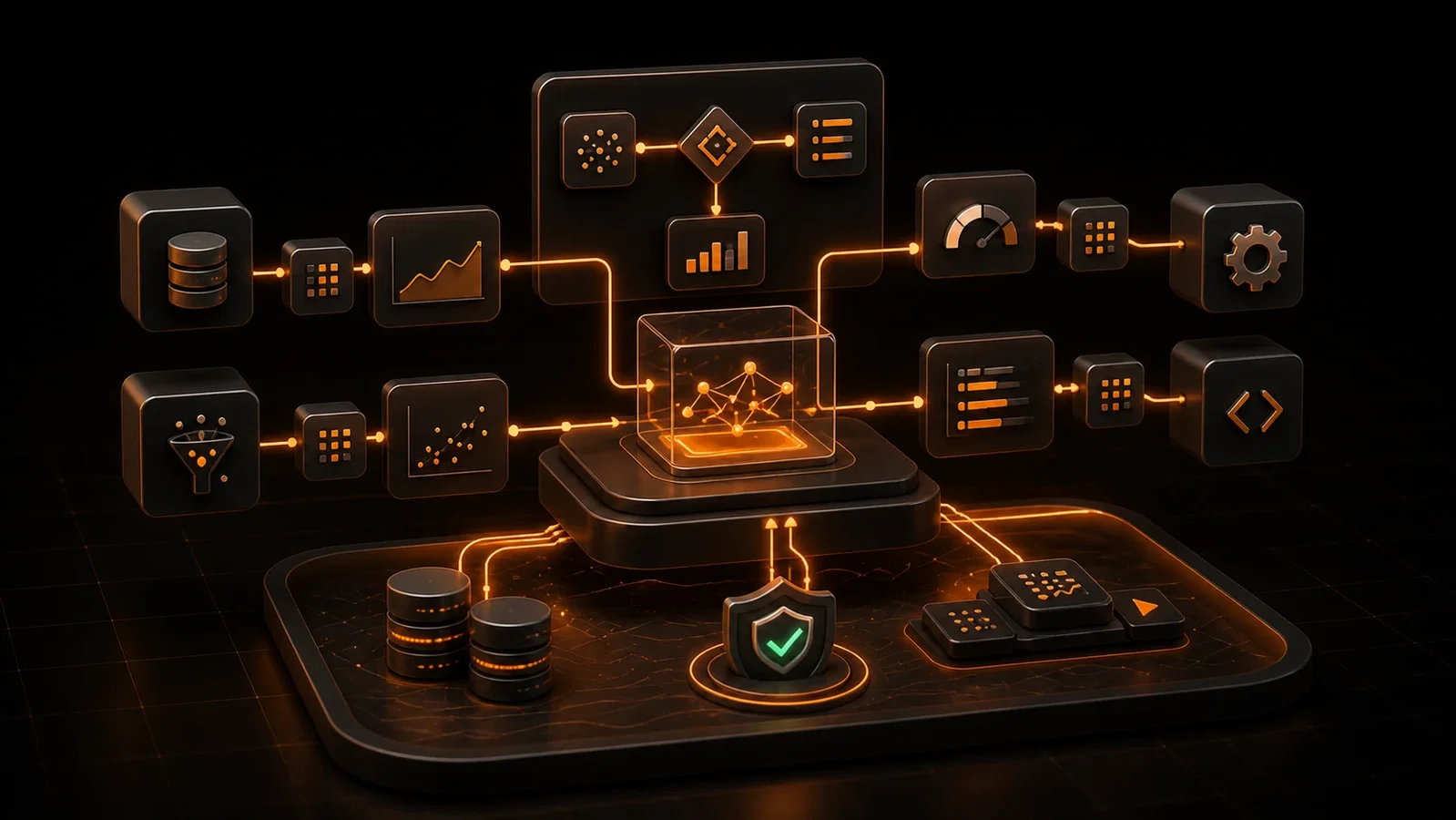
Agent Bricks is the category of tooling Databricks built to close that gap. It is not one product with one release date — since March 2026 it has been the umbrella for all Databricks AI capabilities, and its components reached general availability on separate tracks (Source: Azure Databricks release notes, 2026). That distinction decides which parts you can put in front of production users today and which are still previews.
This is not a features brochure. It is a structured evaluation guide for data analysts and technical PMs deciding whether Agent Bricks is the right build path for their use case — or whether a lighter-weight alternative ships faster and with fewer dependencies.
What Agent Bricks Actually Is (and What It Is Not)
Agent Bricks as the Databricks AI Umbrella: Skills, Tools, Memory, and Reasoning Engine
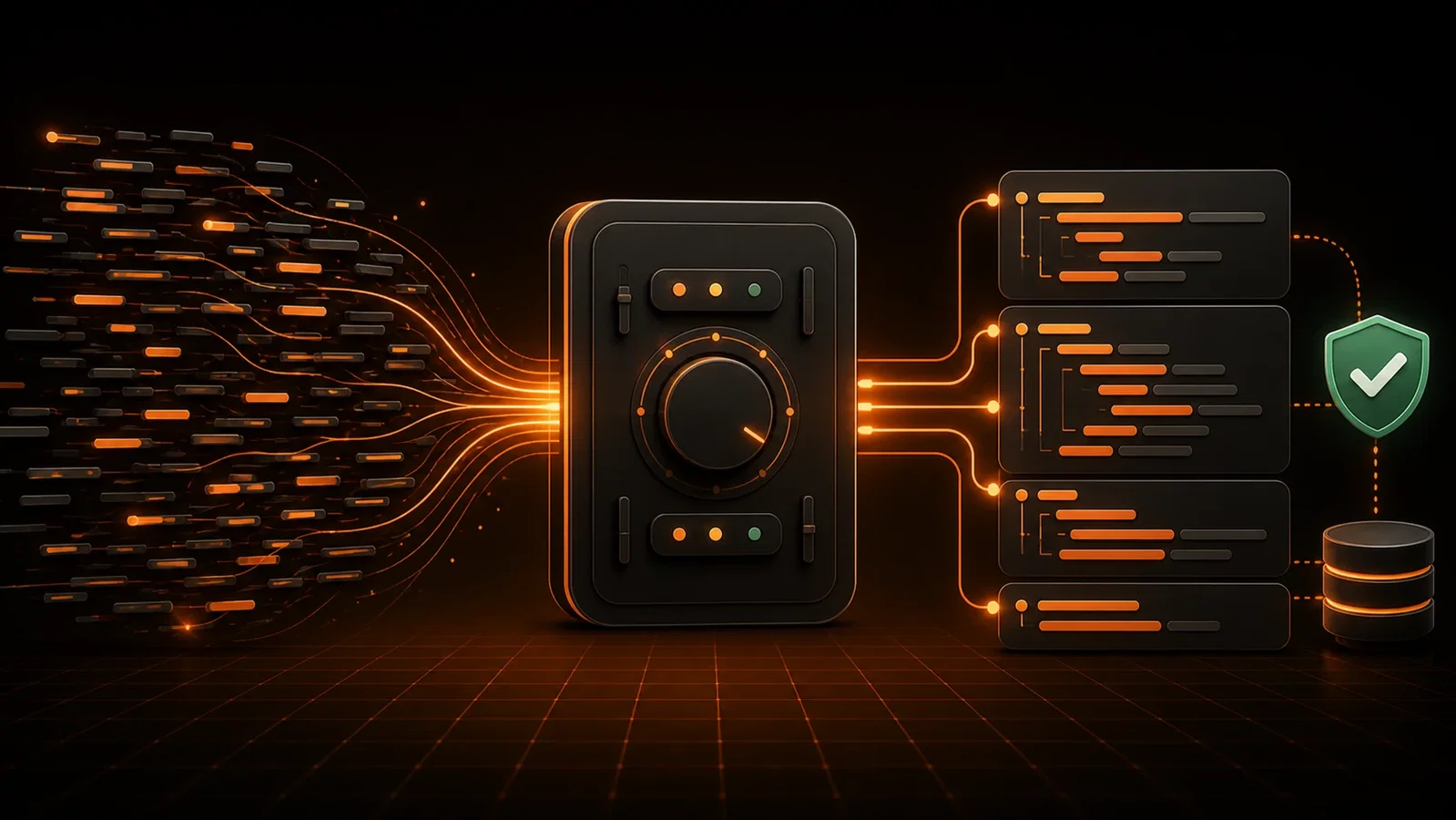
Agent Bricks is Databricks' framework for building, evaluating, and deploying AI agents on top of your lakehouse data. It is not a standalone product — it is the AI orchestration layer within the broader Databricks platform, built on top of Mosaic AI tooling.
The framework organizes agents around four primitives: Skills (discrete capabilities an agent can perform), Tools (external functions or APIs an agent can call), Memory (state persisted across a conversation or session), and a Reasoning Engine that decides which tools to invoke and in what order. Together, these let you build agents that go beyond single-turn query answering into multi-step workflows.
Agents built this way can also call AI functions in Databricks at the SQL level, directly inside your existing queries, without routing data out of the platform.
What Changed in March 2026: Classification and Information Extraction UIs
By March 2026, the Agent Bricks product page expanded significantly (Source: Azure Databricks release notes, 2026). It became the umbrella for all Databricks AI capabilities, not just declarative agents.
Classification and Information Extraction UIs entered Public Preview on 27 March 2026, giving non-engineering users point-and-click interfaces to define extraction tasks over structured and unstructured data. This is a meaningful shift: Agent Bricks is no longer purely a developer framework — it now supports configuration-driven workflows that data analysts can set up without writing agent code.
Both UIs are built on the ai_classify and ai_extract SQL functions, which reached general availability on 11 June 2026 — the functions are GA while the point-and-click experiences on top of them remain in Public Preview (Source: Azure Databricks release notes, 2026).
Is Agent Bricks GA? Release Status by Component
Agent Bricks is not generally available as a single product. Its components ship on separate tracks: Supervisor Agent reached GA in February 2026, and Document Intelligence, Custom Agents on Apps, and Knowledge Assistant reached GA in April 2026. Classification and Information Extraction are still in Public Preview, and Agent Services and managed agent memory are in Beta (Source: Databricks and Azure Databricks release notes, 2026).
The practical consequence for an evaluation: check the status of the specific capability your use case depends on, not the platform. A production commitment built on Supervisor Agent rests on GA infrastructure. The same commitment built on the Classification UI rests on a Public Preview, with the API surface and behaviour still subject to change.
What Agent Bricks Does Not Do Out of the Box
Agent Bricks does not provide a pre-built, end-user BI interface. There is no out-of-the-box dashboard layer or natural-language query UI for business stakeholders. Building that experience requires additional configuration, and it assumes your data is already inside the Databricks ecosystem.
How Agent Bricks Fits Into the Databricks Ecosystem
Unity Catalog, ABAC, and Agent Governance in One Control Plane
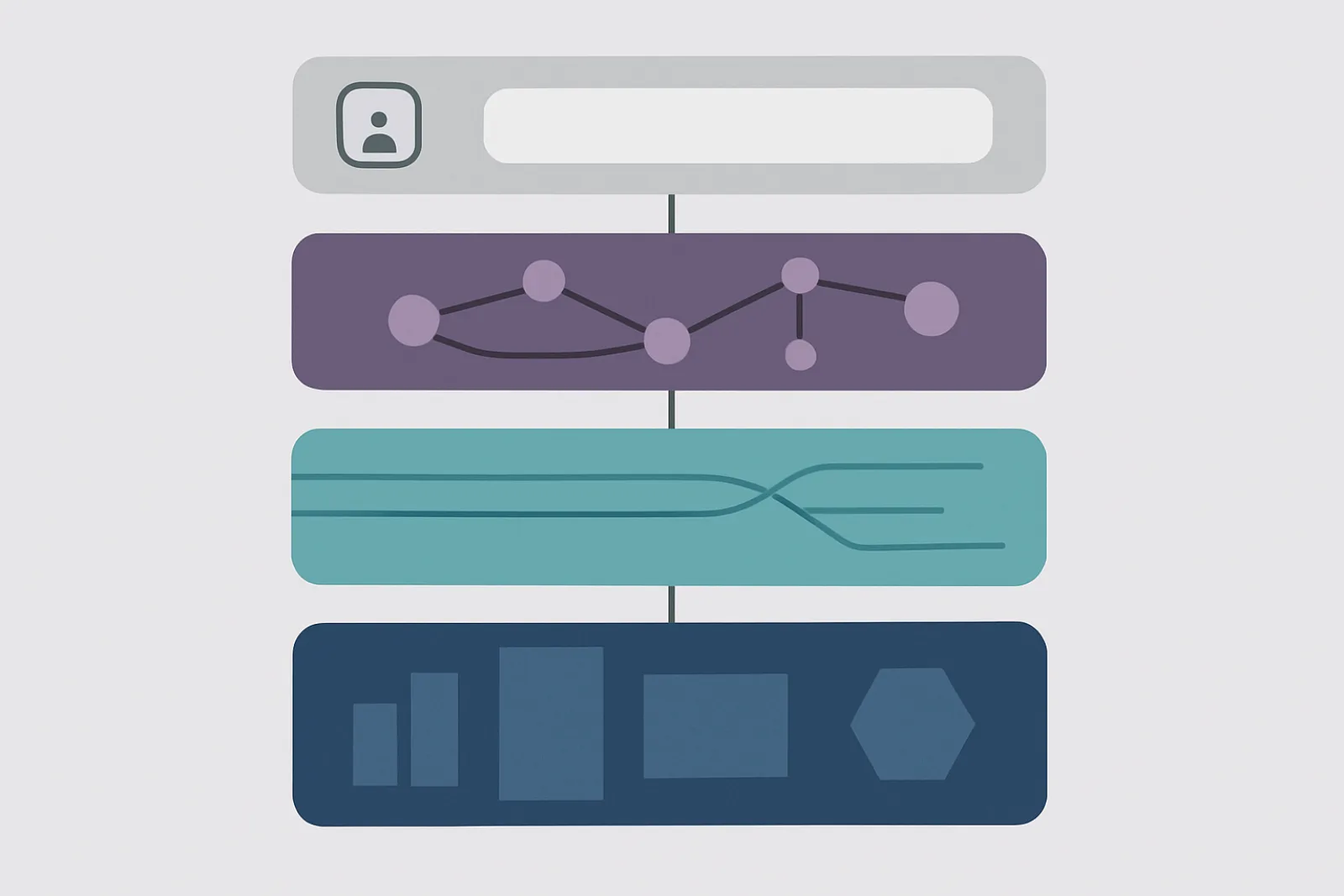
Agent Bricks enforces governance through Unity Catalog, Databricks' unified metadata and access control layer. This means the same permissions model governing your tables and volumes applies to what agents can read and return.
ABAC Databricks — attribute-based access control — extends this further by allowing row- and column-level access decisions based on user attributes rather than just role assignments. For regulated industries or multi-tenant deployments, this means an agent can return different data to different users from the same query, without you writing custom filtering logic per persona.
Auto Loader and Data Freshness: What Agents Actually Query
Auto Loader is Databricks' incremental ingestion mechanism for landing files into Delta Lake. Autoloader Databricks continuously monitors cloud storage and processes new files as they arrive, keeping downstream tables current without requiring scheduled batch jobs.
This matters for agents because an agent's answer quality is directly bounded by data freshness. If your Auto Loader stream is configured with a multi-hour trigger interval, agents querying those tables will return answers based on stale data — and the agent has no built-in mechanism to warn the user about that lag. Ingestion configuration and agent runtime are separate concerns, and teams often underestimate how much that gap affects production answer quality.
AI Gateway: Routing, Rate-Limiting, and Model Access
AI Gateway Databricks acts as the control plane for model traffic within your workspace. It handles routing requests to the correct model endpoint, enforcing rate limits, logging completions for audit, and managing API credentials centrally.
For agent builders, the practical implication is that you can swap the underlying model — say, moving from one LLM to another — without rewriting agent logic, as long as both models are registered behind the gateway. One concrete example of an AI function agents can call inside Databricks SQL is collect_set, which aggregates distinct values from a column into an array. Agents using this function in tool calls can summarize categorical distributions across rows — useful for questions like "what product types did this account purchase?" — without pulling raw row-level data to the application layer.
Agent Bricks vs. Mosaic AI vs. Genie: Comparison Matrix for Technical Evaluators
Feature Parity Table: What Each Solution Covers Natively
| Solution | GA Status | Primary Use Case | Infrastructure Required | Governance Model | Pricing Model | Best Fit For | Notable Limitation |
|---|---|---|---|---|---|---|---|
| Agent Bricks | Per component (Feb–Apr 2026) | Multi-step agent orchestration | Databricks workspace | Unity Catalog + ABAC | DBU-based, usage metered | Lakehouse AI workflows | Requires Databricks ecosystem |
| Mosaic AI | GA | Model training + fine-tuning | Databricks workspace | Unity Catalog | DBU-based, compute metered | Teams building custom models | Not a query-answering UI |
| Databricks Genie Agents | GA | NL-to-SQL over Databricks data | Databricks workspace | Unity Catalog | Pay-as-you-go DBUs since July 2026 | Business user self-service BI | Limited to Databricks data |
| GetInsights | GA | NL questions over existing DBs | None — direct connect | Read-only enforced layer | Subscription ($59–$299/mo) | Teams without Databricks | No multi-step agent logic |
Two naming and billing changes are worth noting before you compare quotes: Genie Spaces were renamed Genie Agents on 8 July 2026, and Genie products moved to pay-as-you-go pricing on the same date, with 150 DBUs of free LLM usage per user each month (Source: Azure Databricks release notes, 2026). Older comparison articles still describe Genie as bundled into platform tiers.
If your primary use case is answering business questions over an existing database rather than orchestrating multi-step agent workflows, GetInsights takes a different approach. It connects directly to your database, enforces a read-only safety layer, and returns SQL, charts, and dashboards from a plain-English question — no ETL, no infrastructure changes, and no Databricks dependency required. Our guide to artificial intelligence and data analytics walks through what that workflow looks like end to end.
Architectural Trade-offs: Declarative Agents vs. Programmatic vs. Natural-Language BI
Agent Bricks is declarative and programmatic — you define what an agent can do, and the reasoning engine decides how. Mosaic AI is lower-level: it is the model development and serving layer, not an agent orchestration framework. Genie sits closest to the business user, offering a conversational interface over Databricks SQL warehouses without requiring agent configuration.
The key architectural distinction is depth vs. accessibility. Agent Bricks handles complex, multi-tool workflows. Genie handles single-turn natural-language queries fast. Mosaic AI handles the model layer underneath both.
Where Each Solution Breaks Down: Known Limitations and Unfit Use Cases
Agent Bricks is the wrong tool if your data does not already live in Databricks and your team lacks ML or platform engineering capacity. Genie underperforms on queries that require joining across semantically complex schemas or returning results outside its SQL generation capabilities. Mosaic AI is not a user-facing query tool at all — evaluators sometimes conflate it with Agent Bricks because they share infrastructure.
Pricing, Cost Drivers, and ROI Considerations for Agent Bricks
How Usage-Based Pricing Works: DBUs, Model Calls, and Serving Costs
Agent Bricks does not have a flat monthly price. Costs accumulate across three layers: Databricks Unit (DBU) consumption for compute, model serving costs per inference call, and any external model API costs if you route through a third-party provider via AI Gateway. Confirm current DBU rates directly with Databricks, as they vary by cloud provider, region, and committed-use agreement.
The practical implication is that cost is proportional to query volume and model complexity. A simple agent calling a small model on light traffic has a meaningfully different cost profile than a multi-tool agent running complex chains against a large model at scale.
Hidden Cost Drivers: Data Prep, Monitoring, and Iteration Cycles
The DBU line item is visible. The hidden costs are the engineering hours spent cleaning data before agents can use it reliably, configuring MLflow monitoring to track agent behavior in production, and the iteration cycles required when an agent's tool-calling logic produces incorrect results.
These costs are real and front-loaded. Teams that skip monitoring discover quality problems through user complaints rather than dashboards — which typically costs more to remediate than the monitoring setup would have cost to build.
A Rough ROI Framing: Time-to-Answer vs. Analyst Queue Time
Ryan Jockers, Assistant Director of Reporting and Analytics at the North Dakota Legislative Council, reported that custom-tailored evaluation let his team ship an information extraction agent they could trust in production and saved 30 days of manual trial-and-error optimization (Source: Databricks press release, 2025).
That framing generalizes into a workable ROI structure: estimate the analyst hours freed per week by reducing ad hoc query requests, multiply by loaded hourly cost, and compare that against the platform DBU cost and engineering time to build and maintain the agent. The math rarely requires precision to make a directional decision — and actual figures will vary significantly by workspace configuration and query volume.
What Breaks in Production: Common Agent Bricks Failure Patterns
Overloading a Single Agent with Too Many Tools
The most frequently cited Agent Bricks failure pattern is giving one agent too many tools (Source: Simbus Technologies and Databricks, 2025). When an agent has access to fifteen functions, the reasoning engine has more surface area to make wrong routing decisions — and debugging why an agent called the wrong tool in a multi-step chain is significantly harder than debugging SQL.
The mitigation is compositional design: smaller agents with focused tool sets that hand off to each other, rather than one agent attempting to handle every workflow variant. This requires more upfront architecture work, but it makes production failures far more diagnosable.
Data Quality as the Silent Agent Killer
Agents do not validate source data before generating answers. If an aggregation like collect_set runs over a column containing nulls, duplicates, or inconsistently formatted values, the agent returns a confident-sounding answer built on dirty inputs — and there is no native warning to the end user (Source: Simbus Technologies and Databricks, 2025).
Data quality problems that were tolerable in dashboard contexts become critical in agent contexts because agents synthesize and present findings as conclusions. Auditing your source tables before building agent tool definitions is not optional — it is the single highest-leverage preparation step.
Skipping Monitoring: Why Quality and Cost Keep Experiments From Reaching Production
Quality and cost are the two barriers that most commonly prevent agentic experiments from reaching production (Source: Simbus Technologies and Databricks, 2025). Both are monitoring problems at their core.
Ingestion lag from Auto Loader in Databricks is a concrete example: if streaming is not configured with near-real-time triggers, agents query tables that are hours behind. Users receive answers that are technically correct against the stored data but factually stale — and without a monitoring layer tracking data freshness at query time, the agent has no mechanism to flag this. Production readiness requires treating observability as a first-class deliverable, not a post-launch addition.
How to Evaluate Agent Bricks Against Your Specific Use Case
Five Questions to Ask Before Committing to an Agent Bricks Build
- Is your data already in Databricks, or does it require migration? If migration is required, add that scope and cost to your timeline before comparing against direct-connect alternatives.
- Do you need multi-step agent orchestration, or primarily natural-language query answering? If the use case is answering business questions rather than executing multi-step workflows, a lighter query layer may ship faster.
- Does your team have ML engineering capacity to maintain agent runtime and monitoring? Agent Bricks in production requires ongoing ownership — if that capacity does not exist today, it needs to be budgeted.
- What is your timeline — weeks or months? Agent Bricks is a build path; if your deadline is measured in weeks, evaluate solutions that require less configuration.
- Does your governance model require ABAC-level row and column controls? If yes, Agent Bricks with Unity Catalog is one of the few solutions that enforces this natively at the agent layer — including AI Gateway routing controls.
Use Cases Where Agent Bricks Is a Strong Fit
Agent Bricks on Databricks performs best when your data is already in the lakehouse, the workflow involves multiple tools or external system calls, and you have a platform engineering team that can own the build and monitoring infrastructure. Regulated industries needing ABAC-level access controls benefit directly from the Unity Catalog integration.
Use Cases Where a Lighter-Weight Alternative Ships Faster
If stakeholders need plain-English answers over an existing database and the primary bottleneck is analyst queue time rather than workflow complexity, a direct-connect query layer reaches production faster — the step-by-step build for a no-code AI analytics workflow covers that path. Similarly, if your data lives outside Databricks — in PostgreSQL, Snowflake, BigQuery, or another warehouse — building on Agent Bricks requires solving a data residency problem before solving the agent problem.
FAQ
Is Databricks Agent Bricks GA?
Not as a single product. Agent Bricks is an umbrella for Databricks AI capabilities, and its components reached general availability separately: Supervisor Agent in February 2026, then Document Intelligence, Custom Agents on Apps, and Knowledge Assistant in April 2026. Classification and Information Extraction remain in Public Preview, and Agent Services and managed agent memory are in Beta (Source: Databricks and Azure Databricks release notes, 2026).
What Is the Difference Between Databricks Apps and Agent Bricks?
Databricks Apps is a hosting environment for deploying web applications — including dashboards and custom UIs — directly within the Databricks platform. Agent Bricks is the AI orchestration framework for building and running agents. The two are complementary: you can host an agent-powered application using Databricks Apps, but they solve different problems.
What Is the Difference Between Agent Bricks and Mosaic AI?
Mosaic AI is the model development, fine-tuning, and serving layer inside Databricks. Agent Bricks is the orchestration layer built on top of it. Mosaic AI handles how models are trained and served; Agent Bricks handles how agents are structured, what tools they call, and how their outputs are governed.
How Much Does Agent Bricks Cost?
Agent Bricks does not carry a flat subscription price. Costs are usage-based and accumulate across DBU compute consumption, model inference calls, and any external model API fees routed through AI Gateway. Exact rates vary by cloud provider, region, and your Databricks contract terms — confirm current pricing directly with your Databricks account team before building a business case.
Conclusion
If your data already lives in Databricks, your team has the engineering capacity to own agent runtime and monitoring, and your use cases require multi-step workflows with ABAC-level governance, Agent Bricks is a defensible production path — provided the specific components you depend on are GA rather than Public Preview. The build investment is real, but that part of the infrastructure is mature and supported.
If the primary blocker is analyst queue time and the core need is letting non-technical stakeholders ask plain-English questions over an existing database, the faster path is a direct-connect query layer — not an agent framework. That is a build vs. connect decision, not a quality judgment. Both paths are valid; they serve different problems on different timelines.
Connect your database and ask your first question in under five minutes — no SQL and no infrastructure changes. Try GetInsights free.
Skip the agent build for plain-English questions
If the goal is letting your team ask questions of an existing database, GetInsights connects directly — read-only, no ETL, no infrastructure changes.
Start for free